
☰
Woking throws up a wider range of plastering problems than most Surrey towns — Victorian lime plaster in Horsell, 1930s sand-cement in Knaphill, and new build settlement cracks across the town centre developments.
We are based in Cobham, around thirty minutes from Woking, and we work across the area regularly. Whatever the problem — we come out, assess it properly, and tell you exactly what needs doing, and what does not.
"Knew exactly what was wrong before they even started. No upselling, no surprises — just a clean professional job." — Woking homeowner
Cracking walls in Woking are not all caused by the same thing — and the right fix depends on the type of property and the nature of the crack.
These homes were plastered with a lime-based system on solid brick walls. Lime plaster is flexible by design and small seasonal cracks are entirely normal. The issue we most commonly find in Woking's older properties is not the original plaster failing, but a modern gypsum skim applied over it at some point. Gypsum is rigid. Lime is flexible. The two move at different rates with temperature changes, and the gypsum skim cracks repeatedly — sometimes within months of being done. If your walls keep cracking in Horsell or Maybury despite being filled and skimmed before, lime and gypsum incompatibility is the most likely explanation.
These were built with a three-coat sand and cement plaster system on brick cavity walls. After eighty-plus years, this plaster is often still bonded but has become brittle, particularly around window frames and door openings where the building flexes. In most cases a bonding coat and fresh skim is all that is needed. Where there has been any history of moisture — a leaking roof, a failed damp proof course, or condensation — the plaster may have absorbed water and begun breaking down from behind. That needs a proper assessment before any skim work is done over the top.
Woking has a significant number of older properties that have changed hands and been renovated multiple times. We frequently encounter walls where different plasters from different eras have been layered over each other — some bonded, some not. The surface cracks unpredictably because the layers beneath are not behaving uniformly. The only lasting fix is stripping back to the original substrate and starting properly.

This is one of the most common calls we receive from Woking homeowners — particularly those in the town centre regeneration developments and newer estates around Sheerwater and the surrounding areas.
New buildings settle as the structure adjusts to load and the timber frame or steel elements within dry out over time. This movement causes the plasterboard to shift slightly at the joints between boards. The gypsum skim over the top — being rigid — cracks along those joints. The cracks are cosmetic. They do not mean the building has a structural problem.
The fix is straightforward: fill the cracks with a fine surface filler, apply scrim tape over any recurring joint cracks, and re-skim the affected area. We carry out this type of work across Woking's newer developments regularly.
The cracks you should be more attentive to in a new build are diagonal cracks radiating from window or door corners, cracks wider than 3mm, or cracks that appear to be growing over time. These can sometimes indicate differential settlement and are worth having assessed — though even these are rarely as serious as they look.
Here is how we work this out on every Woking job — and you can do the first check yourself before calling us:
The tap test is something you can do yourself before calling us. Use your knuckles across different sections of the wall and listen carefully. Hollow sections need stripping — skimming over them produces a finish that will crack again within months, which means paying twice for the same wall.
We cover all internal plastering work across Woking — residential and commercial — carried out by our own experienced team with no subcontracting.
Full room plasters for new builds, renovations and extensions. We match the right system to your wall type — gypsum, bonding, or lime-based where the property requires it.
View plastering servicesSkim coat over existing walls and ceilings, crack repairs and patch work — including new build joint repairs and remedial re-skims across Woking's newer developments.
Learn moreStud wall construction and plasterboard installation for new rooms and extensions — fast and clean across all Woking property types.
Find out moreCornice installation and period decorative plaster features — particularly relevant in Horsell and Maybury's older Victorian and Edwardian properties.
Learn morePremium marble-effect and polished plaster for feature walls and luxury interiors — most often applied in the larger detached homes on the outskirts of Woking.
Explore finishesK-Rend, Weber, Parex and traditional sand-cement — selected to match your Woking property type. Commercial and residential rendering across the whole area.
View rendering servicesVenetian plastering is a technique that builds up multiple thin coats of marble-dust plaster, each one burnished with a steel trowel as it sets. The result is a smooth, deeply polished surface with the visual depth of natural stone — with no paint required on top.
It is not the right choice for every room. But in the right space — a hallway, a principal living area, a feature bathroom wall — it creates a finish that no emulsion can replicate. It also holds up significantly better than painted plaster in high-traffic areas. Minor surface marks can be polished out without having to redecorate the whole wall.
In Woking, we apply it most often in larger properties undergoing full renovation, particularly in Horsell and the more substantial detached homes on the outskirts of the town. If you are wondering whether it suits your space, the best approach is to ask us to bring a sample panel to the site visit. Seeing it in your actual light conditions tells you far more than a photo online.
Damp on internal walls in Woking homes is one of the most frequently misdiagnosed problems we encounter. There are three distinct types — and knowing which one you have determines the right fix.
If damp patches appear on external-facing walls particularly after sustained rain, cracked or blown external render is the most likely cause. The common mistake is applying damp-proof paint on the inside — this traps moisture in the wall and makes the problem significantly worse over time. The correct fix is always external.
Appears as a tide mark, typically no higher than one metre from floor level, on ground floor walls. Caused by groundwater rising through masonry where the damp proof course has failed or been bridged. This needs specialist assessment and the appropriate remedial work before any replastering is considered.
The most common cause of damp in Woking's newer builds and flats. Appears as black mould in corners and around window reveals. Improving ventilation and heating — not plastering — is the primary remedy. However, where condensation has been prolonged, the affected plaster may need replacing once the moisture source is controlled.
We assess all three as part of our free site visit and give you a clear answer before recommending any work. For older Woking properties, Historic England's guidance on external wall treatments is a useful independent reference on how moisture moves through older wall constructions.
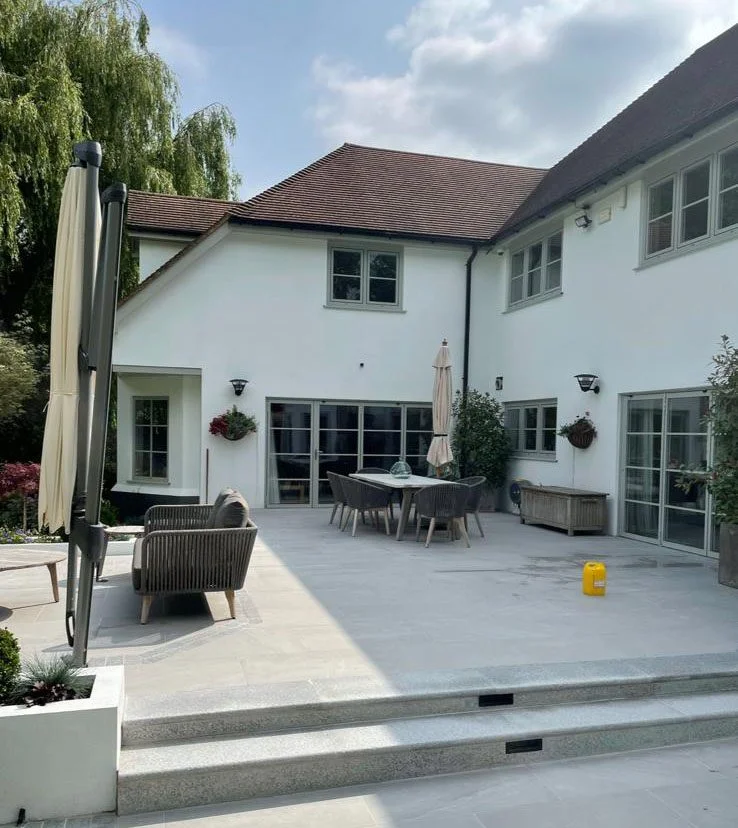
Here are realistic figures based on work we actually carry out in Woking and the surrounding area. All figures include labour, materials and full clean-up. Scaffolding is quoted separately where required.
The main variable in Woking is what we find when we get there. New build crack repairs are relatively straightforward. Older properties — particularly where lime and gypsum have been layered — can require more preparation than anticipated. We identify this during the free assessment, not on completion day.

Know what to look for — catching render failure early prevents it becoming a damp problem inside the property.
Fine cracks spreading across the render like a road map mean the render has dried out and lost flexibility. Water enters with every rain shower. Common on the older sand and cement renders found on Woking's 1930s properties in Knaphill and Goldsworth Park.
Use your knuckles on the rendered surface. Solid means bonded. Hollow means the render has separated from the wall — blown render — and will eventually fall away.
On external-facing walls, this strongly suggests water is getting in through the render. The fix is always external — treating it internally wastes money and makes the underlying problem worse.
The render is retaining moisture rather than shedding it. Water-resistant properties have failed — a sign the surface has broken down and needs replacement.
Moisture is moving through the render and breaking the paint bond. More paint will not solve this — the render needs to be addressed at source.
Once render is falling in chunks, a full re-render is the only option. Patch repairs will not hold reliably once the system has failed this far.
Material selection is not an afterthought. In Woking's older properties especially, using the wrong product is the most common cause of repeated failures.
Thistle Multi-Finish — industry-standard finish plaster for skimming. Sets within 24–48 hours and provides a hard, consistent surface.
Thistle BondingCoat — essential on dense or smooth substrates such as the concrete block commonly found in Woking's newer builds. Ensures the finish skim adheres properly.
Lime-compatible materials — used in Horsell and Maybury's Victorian properties where original lime plaster is being repaired or extended. Applying gypsum directly over lime causes cracking. Compatible materials prevent this.
Carlite Browning — lightweight backing coat for brick and block walls before the finish skim.
Metal angle and stop beads — galvanised or stainless steel profiles at all corners and junctions. The detail that separates a professional finish from a rushed one.
K-Rend silicone render — our most recommended system across Woking. Flexible, breathable and water-repellent. Available in 40+ colours with a 25+ year life expectancy and no repainting required.
Weber and Parex monocouche — factory-coloured through-render. Consistent quality, wide colour choice, suited to both traditional and modern Woking properties.
Sand and cement — traditional system. Durable but less flexible than modern alternatives and more likely to crack over time as the building moves.
Woking homeowners are increasingly looking beyond the standard options. Here is what is gaining traction across the area:
Woking's town centre regeneration and surrounding new developments have created consistent demand for remedial plastering work on properties two to five years old — joint crack repairs, re-skims and patch work as the buildings settle. This is a straightforward and cost-effective fix that restores internal walls to a clean, decoration-ready finish.
Microcement is an ultra-thin cement-based coating applied in 2–3mm layers over existing surfaces. It creates a completely seamless, contemporary finish that is fully waterproof when sealed. Increasingly requested in Woking homes during renovation where homeowners want a clean modern look without a full strip-out of existing tiles.
Factory-coloured silicone and K-Rend renders in warm greys, stone tones and anthracite are now consistently requested across Woking for exterior renovation work. The colour is integral to the render — it never needs repainting.
For the Victorian terraces in Horsell and the 1930s semis in Knaphill and Goldsworth Park where cavity wall insulation is not possible, thermal render systems incorporating EPS insulation boards offer a meaningful improvement in energy efficiency and can reduce heating bills noticeably.
The type of plaster, the substrate condition and the presence of moisture all affect cost and approach. A phone quote is a guess. We never provide a price without a site visit.
In Woking's older properties especially, knowing whether you are dealing with lime or gypsum plaster is essential. Getting this wrong means the same problem returning within a year.
Ask for confirmation before any work starts. We carry full cover on every Woking job — confirmed up front, not on request.
Ask for photos or local references. Our completed project portfolio is available to browse before you contact us.
Labour and materials broken down separately, with a specific list of what is included. Our written quote is always the final price.
We invoice on completion. Requiring a large deposit before starting is not standard practice for reputable contractors — and is worth treating as a warning sign.
From lime-plastered Victorian terraces in Horsell to new build developments in the town centre and 1930s semis in Knaphill — Woking's housing stock is genuinely varied. Each type requires a different approach, and working across all of them means we identify the right solution quickly.
Woking's ongoing development activity means new build settlement crack repairs and re-skims are a regular part of our work in the area. We know what is normal, what is not, and how to fix it properly rather than temporarily.
Woking has significant commercial property stock. We carry out plastering and rendering on commercial premises across the area — not just residential — and can manage larger project scopes.
We are around thirty minutes from Woking town centre. For urgent issues — water damage, a ceiling that needs prompt attention — we can respond quickly without the travel time that inflates quotes from contractors further afield.
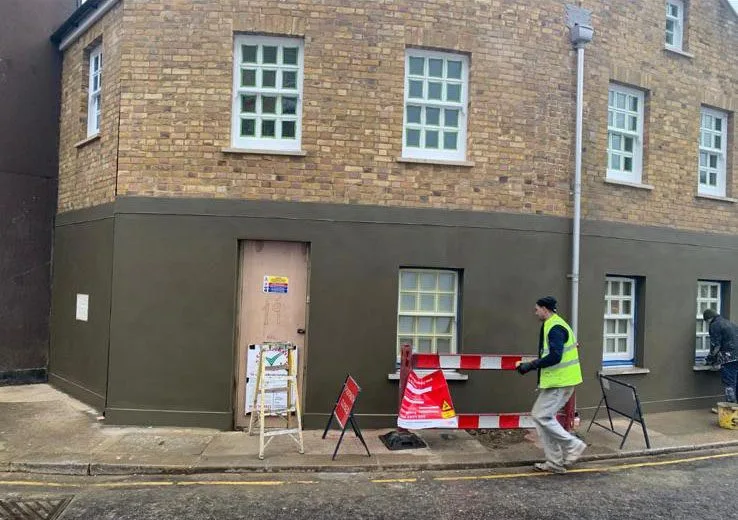
Fresh plaster needs to be fully dry before paint goes on — 3–7 days for a skim, longer for full replaster work. Painting too soon traps moisture and causes the paint to bubble and peel.
New plaster is highly absorbent. A mist coat — one part emulsion, one part water — seals the surface and prevents patchy absorption before proper painting. Skipping this leads to uneven colour and peeling within months.
Open windows where you can. Avoid running high heat while the plaster dries — it causes surface crazing, particularly on lime-based plasterwork in Woking's older properties.
In new builds and recently extended Woking properties, small cracks in the first one to two years are normal. Fill early and repaint. Cracks that return repeatedly in the same spot should be assessed rather than filled again.
Standard gypsum plaster is not waterproof. In bathrooms and kitchens, adequate ventilation protects the plaster behind tiles. If you are planning to tile a wet wall, speak to us before the plastering begins — the substrate specification matters.
12-month workmanship guarantee — any defect arising from our workmanship is rectified at no charge within twelve months of completion.
Named materials only — Thistle, K-Rend, Weber, Parex. Not unbranded bulk products used to cut cost at the expense of the finish.
Full public liability insurance on every Woking job — residential and commercial.
Written quote equals final price — if something unexpected is discovered during the work, we discuss it with you before proceeding, never after.
Based in Cobham, we work across Woking and the surrounding Surrey area regularly. As well as Woking town centre, we cover Horsell, Knaphill, Goldsworth Park, Maybury, Sheerwater, Pyrford and West Byfleet — and further afield across the wider Surrey area.
Whether it is new build settlement cracks, failing render on an older Woking property or an interior that needs replastering as part of a renovation — we are ready to help. Free on-site assessments across Woking and the surrounding area. No obligation, no call centre, just a straight assessment from the people who will do the work.