
Plaster has been used to protect and finish buildings for thousands of years, but not all plastering materials are the same. Choosing the right type of plaster affects how long your walls last, how they handle moisture, and how they look once finished. In this guide, we break down the main types of plaster and plastering materials used in the UK today — from traditional lime plaster to modern acrylic renders — so you can make an informed decision for your home in Cobham, Surrey, or beyond.
Need expert advice before you decide? Get in touch with our team for a free consultation on the right plaster for your property, or see our plastering services in Cobham.

What Are the Main Types of Plastering Materials?
The main types of plastering materials are lime plaster, cement plaster, gypsum plaster, clay plaster, and specialist decorative or exterior finishes such as Venetian plaster and acrylic render systems. Each type differs in breathability, durability, cost, and the surfaces it suits best — which is why the right choice depends on whether you’re working on an interior wall, an exterior render, or a historic building.
| Plaster Type | Best For | Breathability | Durability | Typical Cost |
|---|---|---|---|---|
| Lime Plaster | Period & historic properties | High | Moderate–High | Higher |
| Cement Plaster | Exterior walls, wet areas | Low | High | Low–Moderate |
| Gypsum Plaster | Interior walls & ceilings | Moderate | Moderate | Low |
| Clay Plaster | Eco-friendly interiors | High | Moderate | Moderate |
| Venetian Plaster | Decorative interior walls | Low | High (with care) | High |
| Acrylic/Render Systems | Exterior finishes | Low–Moderate | High | Moderate–High |
Lime Plaster
Lime plaster is one of the oldest types of plastering materials, used extensively in historic and period properties across the UK. It’s made from lime, sand, and water, which cures into a strong, breathable surface over several weeks.
- Properties: Breathable, moisture-resistant, and naturally antibacterial.
- Uses: Ideal for historic buildings, eco-friendly construction, and outdoor walls that need to manage damp.
- Advantages: Prevents mould growth, moves naturally with old buildings, and is environmentally friendly.
- Disadvantages: Longer curing time compared to other types of plaster, and it typically requires an experienced plasterer familiar with traditional methods.
If you own a period or listed property, lime plaster is usually the recommended choice, since it allows the building to breathe rather than trapping moisture behind a harder, less flexible surface. Conservation guidance on lime-based materials for historic buildings can be found via Historic England.
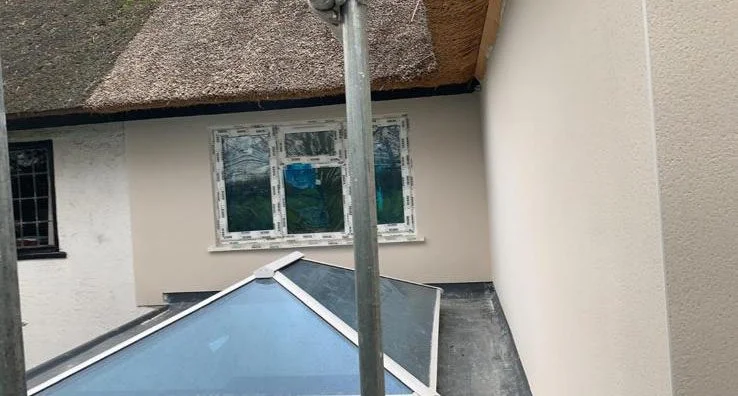
Cement Plaster
Cement plaster is made by mixing cement, sand, and water to form a strong, dense layer. It’s one of the most commonly used types of plaster in modern UK construction, particularly for exterior walls.
- Properties: Hard, durable, and moisture-resistant.
- Uses: Exterior and interior walls, basements, and bathrooms.
- Advantages: Excellent for wet environments, cost-effective, and durable.
- Disadvantages: Less breathable than lime plaster, and can develop cracks if applied incorrectly or on unsuitable substrates.
Cement plaster works well for standard modern brick and blockwork properties, but it isn’t always suitable for older buildings with solid walls, where breathability matters more than raw strength.
Gypsum Plaster
Gypsum plaster is a modern plaster type commonly used for interior applications. It’s made from gypsum, a naturally occurring mineral, and sets quickly to provide a smooth, paintable finish.
- Properties: Lightweight, smooth, and fast-setting.
- Uses: Interior walls and ceilings, including new plasterboard and skimmed surfaces.
- Advantages: No curing time required, smooth finish, easy to paint.
- Disadvantages: Not suitable for damp or exterior surfaces.
Most modern UK homes use gypsum-based finishing plasters (such as multi-finish or board finish) for interior walls and ceilings, since they give a smooth, professional surface ready for decoration within days — as seen in this recent project we completed in Woking. If you’ve just had a room re-skimmed, our guide on painting new plaster explains exactly how long to wait and how to apply your first coat correctly.

Clay Plaster
Clay plaster, also known as mud plaster, is an eco-friendly and natural plaster option made from clay, sand, and natural fibres. It has been used for thousands of years and is seeing a resurgence in sustainable construction.
- Properties: Breathable, natural, and eco-friendly.
- Uses: Eco-friendly homes, indoor walls, and artistic or textured finishes.
- Advantages: Non-toxic, reusable, and offers a unique natural aesthetic.
- Disadvantages: Susceptible to water damage and requires regular maintenance.
Clay plaster suits homeowners specifically looking for natural, low-impact building materials, though it’s a more specialist choice and less common than lime, cement, or gypsum plaster in standard UK renovation projects.
Venetian Plaster
Venetian plaster, or polished plaster, is known for its luxurious, marble-like finish. Made from a blend of lime and marble dust, it’s a decorative plaster type that adds an elegant, polished look to interior spaces.
- Properties: Polished, glossy, and highly aesthetic.
- Uses: Interior decorative walls, accent walls, and upscale interiors.
- Advantages: Durable, luxurious appearance, available in a range of colours.
- Disadvantages: Expensive, and requires a skilled, experienced plasterer to apply correctly.
Venetian plaster is a popular choice for feature walls, hallways, and high-end interior renovations where a decorative, statement finish is the priority rather than a purely functional surface.

Exterior Render Finishes: Acrylic, Silicone & K-Rend Systems
Alongside traditional plasters, modern exterior walls are increasingly finished with acrylic and silicone-based render systems, including branded products such as K-Rend. These are technically renders rather than plasters, but they’re often searched for under “types of plaster” and “exterior plaster finishes” because they serve the same protective and decorative purpose on external walls.
- Properties: Flexible, water-resistant, and durable.
- Uses: Exterior walls, both new builds and renovations, especially in exposed or coastal areas.
- Advantages: Wide range of colours and textures, low maintenance, excellent weather resistance.
- Disadvantages: Higher upfront cost than traditional sand and cement render.
We’ve applied K-Rend and acrylic render systems on projects across Surrey, including a recent finish in Esher.
For a full breakdown of pre-mixed exterior render systems, benefits, and cost considerations, see our comprehensive guide to K-Rend, or explore our dedicated K-Rend rendering services in Cobham and general rendering services in Cobham. General guidance on render specifications and standards is also available from the Rendering Association UK.

Plaster Finish Types for Interior Walls
Beyond the material itself, the finish type also matters. The three most common interior plaster finish types are:
Smooth (Skim) Finish — A thin, level topcoat applied over plasterboard or an existing wall to create a flawless, paint-ready surface. This is the most common finish type in UK homes today.
Textured Finish — Created using specific trowel or float techniques, or textured products, to add visual interest or hide minor imperfections in older walls.
Decorative Finish — Polished, tinted, or patterned finishes (such as Venetian plaster, above) used for feature walls and design-led interiors.
Most standard residential plastering jobs use a smooth skim finish, since it offers the cleanest base for painting or wallpapering. For a closer look at how professional plasterers achieve a flawless smooth finish, see our article on plastering precision and technique — a technique we recently applied on a project in Leatherhead.
What About Bonding Plaster?
Bonding plaster is a specialist undercoat plaster used as a base layer on difficult surfaces (like concrete or low-porosity blockwork) before a finishing plaster is applied. It’s more of a trade/application-specific product used by professional plasterers than a standalone material choice for homeowners to pick between.
If you want a full breakdown of bonding plaster, hardwall plaster, and the other trade products UK plasterers actually use on walls, read our detailed guide: Types of Plaster for Walls — A UK Trade Guide.
How to Choose the Right Type of Plaster for Your Project
When deciding between the different types of plaster available, consider three key factors:
- Location — For exterior walls, opt for a durable, weather-resistant option like cement plaster or an acrylic render system. For interiors, gypsum or Venetian plaster offer the best finishes.
- Purpose — If aesthetics are a priority, Venetian or clay plaster can add unique texture and character. For eco-conscious projects, clay and lime plaster are the natural choices.
- Environment — In high-moisture areas, cement or render systems provide extra resistance. Avoid gypsum plaster in damp environments, since it lacks the same moisture resistance.
- Property Age — For period or listed buildings, lime plaster is almost always the right choice, since it allows old walls to breathe and manage moisture naturally.
We regularly advise homeowners across Cobham and the surrounding Surrey towns — including Weybridge, Guildford, Epsom, and Oxshott — on which plaster or render best suits their property.
FAQs About Types of Plaster
What are the different types of plaster and their uses? The main types are lime plaster (historic/breathable walls), cement plaster (exterior/wet areas), gypsum plaster (interior walls and ceilings), clay plaster (eco-friendly interiors), and Venetian plaster (decorative feature walls). Each is suited to a different combination of location, moisture exposure, and finish.
Can I use gypsum plaster for exterior walls? No, gypsum plaster is not suitable for exterior applications, as it lacks moisture resistance and will break down when exposed to the elements.
Which type of plaster is best for decorative finishes? Venetian plaster is the most popular choice for decorative, polished finishes due to its marble-like appearance and range of achievable colours and textures.
Is lime plaster environmentally friendly? Yes, lime plaster is one of the most eco-friendly types of plaster, as it’s natural, breathable, and has a low environmental impact compared to cement-based alternatives.
What’s the difference between plaster and render? Plaster is typically used internally, while render refers to similar materials (cement, acrylic, silicone, or lime-based) applied to exterior walls. Products like K-Rend are technically renders rather than plasters, though the terms are often used interchangeably by homeowners.

Conclusion
Understanding the different types of plaster and plastering materials — from traditional lime and cement to modern gypsum and decorative Venetian plaster — helps you make an informed decision for your next project. Your choice should always be guided by the location, purpose, and environment of the wall in question, as well as the age and character of your property.
If you’re planning a renovation and want to know exactly which plaster your walls need — including hardwall, bonding, and other trade-specific products — read our companion guide: Types of Plaster for Walls — A UK Trade Guide. You can also browse examples of our completed work on our projects page, or view our full range of services.
Ready to get started? Contact Surrey Plastering & Rendering Company for expert advice and a free quote on your project.